
AI event correlation groups AI-related security signals across endpoints, prompt injection, exposed secrets, data exfiltration and risky agent activity, into investigation-ready incidents instead of isolated alerts. Done properly, it cuts false positives, speeds up triage, and hands analysts an evidence chain SOAR playbooks can act on immediately. None of that works without solid telemetry, a common schema, and tamper-evident records underneath it.
TL;DR:
- Collect comprehensive telemetry on endpoint AI tool calls, process activity, network connections, file access, and user identity to ensure accurate correlation.
- Normalize all AI event data to a common schema like OCSF to facilitate scalable search, enrichment, and incident mapping across diverse tools and sources.
- Use hash-chained audit logs with
prev_hashandrow_hashfields to enable tamper-evident records and independent verification by the SIEM.- Prioritize grouping events by context and scoring with simple heuristics over machine learning to quickly filter genuine incidents from routine chatter.
- Limit raw alert forwarding and focus on metadata-only signals during pilots to manage storage, privacy, and improve analyst understanding.
Table of Contents
- What is AI event correlation and why do SOCs need it?
- What telemetry should SOCs collect on endpoints?
- Why does normalisation and evidence integrity matter?
- How do you correlate and prioritise AI-related incidents?
- How does correlated data reach SIEM and SOAR workflows?
- What should a pilot checklist look like?
- A practitioner's take on what actually moves the needle
- Where Alectura fits in your correlation stack
- Sources
- FAQ
What is AI event correlation and why do SOCs need it?
This article covers the endpoint-focused definition: correlating AI-related security events on corporate devices, not the AIOps practice of clustering infrastructure logs to find root cause. Different problem, different audience.
Agentic AI has changed what an endpoint threat looks like. A copilot with delegated credentials can read a spreadsheet, summarise it, and push the summary to an external API in under a second, well before a human notices. Shadow AI tools multiply that risk: unsanctioned browser extensions and IDE plugins hold API keys and session tokens your security stack never inventoried. Endpoint-native visibility matters because agentic AI can exfiltrate sensitive data at machine speed before network controls get a chance to intervene.
Correlation has to deliver three things for a SOC to trust it:
- Visibility into every AI tool touching a device, not just the sanctioned ones
- A link between the AI event, the identity behind it, and the data it touched
- Prioritisation that separates a genuine incident from routine model chatter
Without that third point, analysts drown in noise the moment they turn correlation on.
What telemetry should SOCs collect on endpoints?
Correlation is only as good as the signals feeding it. Skimping on collection here is the single most common reason pilots stall later.
- Agent and tool-call audits — capture sequence numbers, the action taken, token counts, and the model identifier for every AI tool call on the device.
- Process and network telemetry — what spawned the AI process, what it connected to, and whether that destination is expected.
- File-access, clipboard, and DLP signals — flag when an AI tool reads a classified document or a clipboard event moves sensitive text into a prompt window.
- Identity and session context — the authenticated user, session age, and privilege level behind the action.
- Data classification tags — so an alert about a customer database looks different from one about a public FAQ.
Treat raw prompt and output content as an opt-in, not a default. Forward metadata (event type, risk flags, hashes) to the SIEM, and only send raw text to specific destinations when a case genuinely needs it. That single design choice keeps privacy teams onside and cuts your storage bill.
Pro Tip: Start metadata-only. Turning on raw-content forwarding retroactively is far easier than explaining to a privacy officer why three months of prompt text is already sitting in your SIEM.
Endpoint telemetry design deserves its own deep dive, and Alectura's endpoint telemetry guidance walks through the field list in more depth.
Why does normalisation and evidence integrity matter?
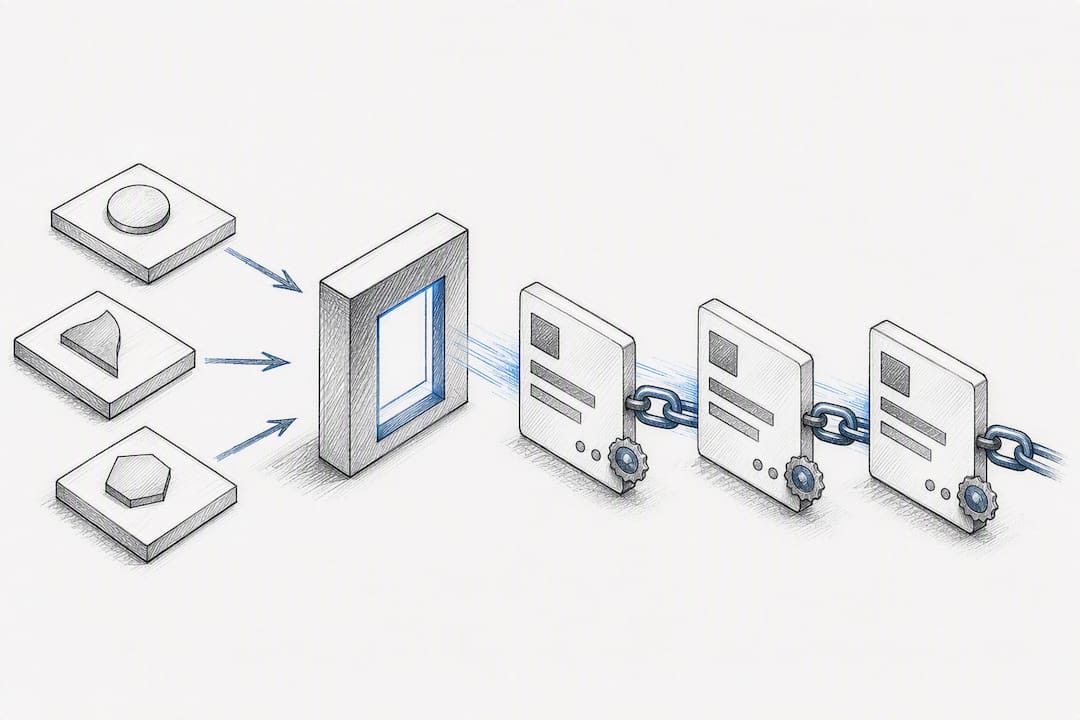
A prompt-injection alert from one agent framework and a DLP flag from a browser extension rarely share a schema. Without normalisation, correlation logic has to write a custom parser for every tool you inventory, which does not scale past a handful of vendors.
Normalising events to a common schema like OCSF 1.3.0 fixes that. Once every source speaks the same field names, your SIEM can search across them, enrich them with identity and data-classification context, and map them to a single incident timeline without bespoke glue code.
The fields that matter most for AI-specific events:
- Timestamp and sequence number for ordering events within a session
prev_hashandrow_hashfor chaining each record to the one before itdetected_types(secrets, PII, prompt injection, policy violation)verdictandrisk_levelfor downstream prioritisation
Hash-chained audit rows are what make the log tamper-evident. If someone alters a local record, the chain breaks, and because the SIEM already has the forwarded hashes, it can verify the chain even when the local file has been changed. This is the same principle behind SOC 2 logging requirements, where auditors expect a verifiable trail, not just a stored one.
Forwarding
prev_hashandrow_hashalongside each OCSF event lets the SIEM rebuild and verify the chain independently of the local host, per the design documented in Secure-Vector's AI threat monitor project.
Alectura's own writeup on hash-chained audit records covers the row-level implementation if you need to build this yourself.
How do you correlate and prioritise AI-related incidents?
Raw event volume is not the problem. Turning that volume into a shortlist an analyst can act on in minutes, that's where most pilots fail.
- Group by shared context first. Cluster events by identity, host, and temporal proximity, plus a less obvious one: API key reuse across sessions. A key that shows up on three different endpoints inside an hour is worth a look regardless of what each individual event says.
- Score with heuristics before you reach for machine learning. A simple threshold model, three DLP flags plus one prompt-injection detection within ten minutes equals high confidence, catches most of what matters. Layer ML-assisted scoring on top once you have enough labelled incidents to train against.
- Map to MITRE ATT&CK techniques. This gives analysts a shared vocabulary and lets you compare AI-driven incidents against the rest of your detection library instead of treating them as a separate category.
- Build an evidence pack before any AI touches triage. Include the relevant event IDs, supporting log entries, and correlation context, then run a deterministic verifier against that evidence before letting anything auto-escalate. This is the pattern described in one SOC analyst automation writeup: if the verifier's confidence is low, the system defers to a human instead of guessing.
Grouping related signals across endpoints and cloud services this way is what lets correlation engines spot an attack chain quickly and hand it to automated containment. For a worked example of prompt-injection signals feeding into this pipeline, see Alectura's prompt injection detection guide.
How does correlated data reach SIEM and SOAR workflows?
None of this matters if the correlated incident dies in a dashboard nobody checks. It has to land where your analysts already work.
A SIEM forwarder pattern is straightforward: package the OCSF-normalised event as a payload and stream it to whichever platform your SOC runs, Splunk HEC, Microsoft Sentinel, Google Chronicle, or Datadog all accept this kind of feed. Keep it metadata-only by default, with raw data as a per-destination opt-in, and test each destination with a sample token before trusting it in production.
On the SOAR side, define runtime inspection points, moments in the agent's execution where an automated playbook can intervene: isolate the host, revoke the session token, quarantine a flagged file. Every automated action should attach the evidence pack so the analyst reviewing it later has full context, not just a verdict.
- Forward OCSF payloads with metadata-only defaults, raw content opt-in per destination
- Trigger SOAR isolation and token revocation only when the evidence pack meets your confidence threshold
- Give analysts a replay timeline that reconstructs the session step by step
- Build explicit override points so a human can halt an automated action mid-flow
Pro Tip: Test your SOAR isolation playbook against a decoy endpoint before you ever point it at production. The first automated device isolation you trigger by accident is a conversation you don't want to have with the help desk.
Alectura's post on SOAR runtime inspection points breaks down where these hooks should sit in more detail, and the integration patterns discussed by 121 Group are worth reading if you're mapping this against a broader AI stack.
What should a pilot checklist look like?
A pilot that tries to cover the whole fleet on day one will fail for reasons that have nothing to do with whether correlation works. Scope it tight first.
- Pick a manageable number of endpoints across a mix of roles, so you see genuine variety in AI tool usage.
- Choose one SIEM destination and confirm the OCSF mapping end-to-end with a test token before real events flow.
- Set a retention and privacy policy up front, metadata-only unless a specific case justifies raw forwarding.
- Run a tabletop replay that reconstructs a correlated session top to bottom, confirming analysts can follow the story without gaps.
- Track go/no-go metrics for four to six weeks before deciding on a wider rollout.
| Metric | What it tells you |
|---|---|
| Precision/recall on flagged incidents | Whether correlation surfaces real threats without drowning analysts |
| Mean time to triage | How much faster analysts move from alert to decision |
| Verified tamper-evidence checks | Whether the SIEM can confirm the hash chain independently |
| SOAR playbook success rate | Whether automated containment runs cleanly without manual cleanup |
The most common pitfall is forwarding raw content everywhere out of caution, which balloons storage and slows every review. The second is skipping identity context, which leaves analysts unable to tell whether an alert is a contractor testing a tool or a compromised account. Pilot metrics should prioritise triage time and verified evidence integrity over raw alert-volume reduction; volume drops on its own once correlation is tuned.
A practitioner's take on what actually moves the needle
Most vendors pitch AI event correlation as a noise-reduction feature. That undersells it. The real value shows up when an analyst can trust the evidence chain enough to let SOAR act without a second manual check, and that trust comes from hash-chained records and disciplined telemetry design, not from a bigger model.
If you want one test to run this week: enable metadata-only SIEM forwarding from a single test endpoint, then confirm the OCSF fields land correctly and the hash chain verifies inside your SIEM. That thirty-minute exercise tells you more about whether your pilot will survive contact with production than any vendor demo.
For deeper technical detail on the logging patterns referenced here, see Alectura's posts on AI agent logging and SOAR inspection points.
— Nathan
Where Alectura fits in your correlation stack
Everything described here, endpoint discovery, tool-call audits, OCSF-normalised forwarding, hash-chained integrity, is what Alectura builds as AI Detection and Response for corporate endpoints. It discovers the AI tools running across your fleet, tracks what each one connects to through MCP and other integrations, and flags secrets, PII exposure, and prompt injection as they happen, then forwards that correlated evidence into your existing SIEM and SOAR workflows.

Where a traditional endpoint stack sees nothing once a copilot opens inside a browser tab, Alectura keeps that activity inventoried, audited, and enforceable without adding friction for your staff. If you're scoping a pilot, start with the AI security glossary to align your team on terms like shadow AI and AIDR, then reach out to walk through what a pilot deployment looks like on your own fleet.
Sources
For hands-on OCSF forwarder code and payload examples, see Secure-Vector's AI threat monitor. For SIEM-integrity logging standards, see the SOC 2 logging checklist.
- Secure-Vector / securevector-ai-threat-monitor (GitHub)
- AI for incident response: faster detection, smarter forensics - CiBRAI
FAQ
What is the difference between AI event correlation and AIOps correlation?
AI event correlation, as covered here, links AI-related security events like prompt injection and data exfiltration across endpoints for incident response. AIOps correlation clusters infrastructure logs and metrics to find root cause in application monitoring, a different discipline entirely.
Why does OCSF matter for AI event correlation?
Normalising events to a common schema like OCSF fixes that, so a SIEM can search, enrich, and map events across sources without a custom parser for each vendor.
How do hash-chained audit records help a SOC?
Fields like prev_hash and row_hash let a SIEM verify a device's audit chain independently, so if a local log is altered, the break in the chain is detectable even from forwarded metadata alone.
What should a pilot measure to prove AI event correlation works?
Focus on precision and recall of flagged incidents, mean time to triage, verified tamper-evidence checks, and SOAR playbook success rate, not raw alert-volume reduction alone.
Does Alectura handle AI event correlation on endpoints?
An AI detection and response platform can discover AI tools across the fleet, audit tool-call activity, and forward correlated, OCSF-normalised events into existing SIEM and SOAR pipelines.