
AI access control, in the enterprise security sense, means endpoint-level AI Detection & Response (AIDR): discovering every copilot, local agent, and MCP server running across your fleet, inventorying what sensitive data each one can reach, monitoring prompt and tool activity in real time, and enforcing least-privilege guardrails before data leaves the building. It is not about facial recognition or physical door locks. The Australian Privacy Principles (APP), NIST AI RMF, and ISO/IEC 42001 all create obligations that unmanaged AI endpoints can silently breach every day.
Three things to do right now:
- Run rapid discovery. Scan endpoints for every AI tool in use, including browser copilots, IDE assistants, local agents, and unsanctioned LLM endpoints. You cannot govern what you cannot see.
- Enable audit-mode runtime protection on a pilot group. Collect behaviour events without blocking anything yet. Tune signal-to-noise before you enforce.
- Map AI access to critical data repositories and apply DLP rules. Identify which agents can read your code repositories, HR systems, or customer data stores, and restrict access to what each agent genuinely needs.
Key takeaways
Effective AI access control requires discovering every AI tool on your endpoints before you enforce anything, then moving through audit mode to block with measurable success criteria at each gate.
| Point | Details |
|---|---|
| Discover before you enforce | Inventory all copilots, agents, and MCP servers on endpoints before applying any blocking policy. |
| Audit mode is non-negotiable | Run audit mode for at least two weeks, tune to an acceptable false-positive rate, then gate on SOC sign-off before enabling block. |
| Integrate with SIEM and EDR | Map prompt timelines, tool invocations, and file access events into existing Advanced Hunting tables for correlation and investigation. |
| Align controls to APP and risk frameworks | Document DLP rules, access restrictions, and model cards as audit evidence for APP 11, NIST AI RMF, and ISO/IEC 42001. |
| Alectura covers the checklist | Alectura's AIDR platform delivers discovery, audit-to-block runtime protection, DLP, and SIEM/SOAR integration in a single endpoint-deployed solution. |
Table of Contents
- Why AI access control matters for Australian enterprises
- What capabilities must an AIDR solution provide?
- Technical controls that enforce least privilege and stop exfiltration
- How to build SOC workflows for AI agent telemetry
- Aligning AI access control with the Australian Privacy Principles
- Pilot and phased rollout: a phased roadmap
- Investigating AI incidents: what to collect and how to contain
- Alectura covers the full AIDR checklist
- What security leaders actually get wrong about AI access control
- Sources
Why AI access control matters for Australian enterprises
Shadow AI is already widespread across Australian organisations, and banning tools has proven ineffective. The practical answer is a discover-first strategy: sanctioned tooling, DLP, and clear acceptable-use policies that remove the incentive to go rogue. Without that, every unmanaged copilot is a potential exfiltration channel.
The business risks are concrete:
- Data exfiltration: Agents with broad file-system access can silently transmit customer PII, financial records, or source code to external model endpoints.
- IP leakage: Prompts containing proprietary designs or unreleased product details are processed by third-party models outside your control.
- Model-weights exposure: Locally hosted model artefacts, if unprotected, are accessible to any process with file-read permissions.
- Supply-chain risk: Unmanaged MCP servers on laptops and cloud hosts expand the attack surface in ways traditional EDR does not cover.
- Breach remediation costs: AI-related incidents add investigation complexity because standard forensic playbooks were not built for prompt timelines or agent tool-invocation logs.
BDO Australia recommends embedding AI governance into existing enterprise risk frameworks rather than treating AI detection as a separate programme. That framing matters for boards: AI risk is not a new silo, it is an extension of the cyber risk register your executives already review.
The APP obligation is direct. APP 11 requires entities to take reasonable steps to protect personal information from misuse, interference, loss, and unauthorised access. An AI agent that reads a CRM and submits customer records to an external model is a potential APP 11 breach, regardless of whether a human initiated it.
What capabilities must an AIDR solution provide?
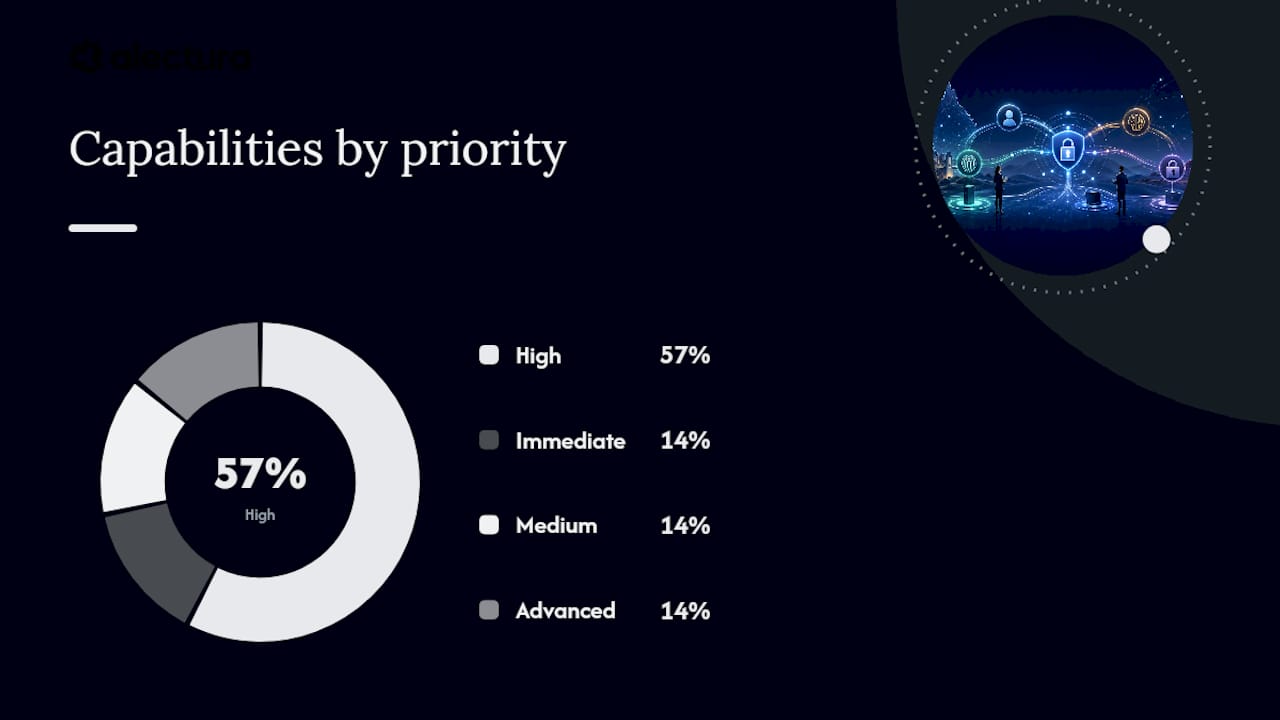
Security teams evaluating AI access control solutions should assess against this capability checklist. The first three columns are table-stakes; the fourth is advanced.
| Capability | What it does | Priority | Example signal |
|---|---|---|---|
| Endpoint discovery | Finds copilots, local agents, MCP servers, unsanctioned LLM endpoints | Immediate | Agent process list, browser extension inventory |
| Agent identity & least privilege | Assigns cryptographic identity per agent; enforces role-based authorisation | High | Per-agent key, policy decision point |
| Runtime protection (audit → block) | Monitors behaviour events; escalates to block after tuning | High | Prompt-injection attempt flagged in audit mode |
| DLP & content inspection | Detects PII/secrets in prompts and responses; inline redaction or block | High | Credit card pattern in outbound prompt |
| SIEM/SOAR integration | Feeds telemetry into Advanced Hunting tables; triggers automated response | High | Alert correlation with EDR event |
| Prompt evidence capture | Stores prompt snippets (with redaction options) for investigation | Medium | Forensic prompt timeline |
| Agent reputation & trust scoring | Scores agents by behaviour history and provenance | Advanced | Anomaly score on new agent binary |
Cyber: agentic AI should be governed as IT infrastructure, with least privilege, identity management, and continuous monitoring applied from day one and not retrofitted after an incident.
Pro Tip: Start with discovery and DLP before you touch runtime blocking. A false-positive block on a developer's coding assistant will generate more resistance than any security policy can overcome. Get the inventory right first.
For a deeper look at AI agent governance playbooks, including privilege lifecycle management, the Alectura blog covers the full control set.
Technical controls that enforce least privilege and stop exfiltration
Knowing what is running is only half the problem. These controls close the gap between visibility and enforcement.
Endpoint runtime protections
Enable agent runtime protection in audit mode first. Collect behaviour events, file access records, and outbound API calls for at least two weeks before switching to block. Document your tuning criteria, specifically your acceptable false-positive rate, before you enforce. Microsoft Defender for Endpoint's phased audit-to-block rollout illustrates the pattern well, even if your stack differs.
MCP and gateway controls
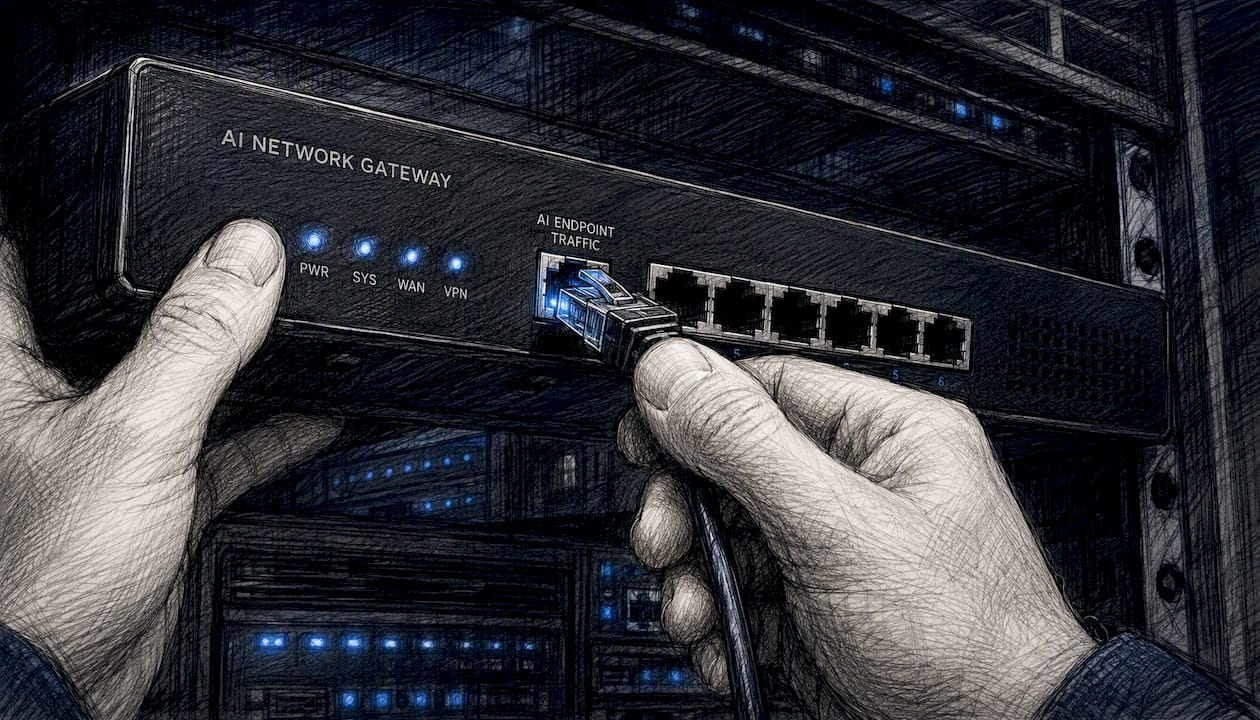
Route all MCP traffic through an authorised gateway with OAuth-based authentication and content inspection. Unmanaged MCP servers sitting directly on developer laptops bypass every network control you have. Centralising that traffic is the single highest-leverage network control for AI governance. AI system integration architectures for private deployments show how gateway routing fits into existing network topologies.
Credential and key hygiene
Treat each agent as a unique principal with its own key or certificate, separate from the human user's credentials. Rotate and revoke via a trusted registry. An agent that shares the user's OAuth token inherits every permission that user holds, which is rarely least-privilege.
Prompt hardening
Sanitise inputs before submission to models. Validate that outputs do not contain credential-like patterns or PII before they are written to files or sent downstream. This is not a replacement for DLP, it is a complement: DLP catches what prompt hardening misses at the network layer.
Pro Tip: Apply AI data loss prevention techniques to MCP traffic specifically. Most DLP policies were written for email and web; MCP is a new channel that requires its own inspection rules.
How to build SOC workflows for AI agent telemetry
Cyber.gov.au recommends logging inputs, outputs, endpoint access, and repository logins to detect behavioural change, support investigations, and meet compliance obligations. The question is how to surface that telemetry in workflows your SOC already runs.
Prompt timelines, tool invocation records, and file access events are the AI equivalent of process creation logs. Without them, attributing an AI-related incident is guesswork. With them, blast-radius mapping takes minutes rather than days.
Telemetry to capture and where it goes
| Telemetry type | Collection point | SIEM destination | Investigation use |
|---|---|---|---|
| Prompt inputs/outputs | Endpoint agent | Advanced Hunting / custom table | Prompt-injection triage |
| Tool invocations | Agent runtime | Alert queue | Lateral movement detection |
| File access events | EDR | Existing process table | Data exfiltration scope |
| API calls to model endpoints | Network gateway | Firewall/proxy log | Exfiltration confirmation |
| Agent identity & key material | Key registry | SIEM correlation | Attribution |
| Behaviour records | Endpoint runtime | BehaviourInfo-equivalent | Anomaly baselining |
SOC playbook steps for an AI alert
- Triage the alert: confirm agent identity, check prompt evidence snippet, and classify as misuse, compromise, or false positive.
- Map blast radius: which data repositories did the agent access in the preceding window?
- Isolate: freeze agent credentials and, if warranted, isolate the endpoint.
- Preserve evidence: lock prompt timeline, tool invocation logs, and file access lists before any remediation.
- Automate containment via SOAR: revoke gateway access, notify data owners, and open a change ticket for policy review.
For AI agent monitoring operational guidance, including triage indicators and alert tuning, the Alectura SOC playbook covers each step in detail.
Aligning AI access control with the Australian Privacy Principles
Governance without ownership fails. Assign a single executive owner, typically the CISO or a delegated AI Risk Officer, with operating accountability shared across SOC, IT, legal, and data governance.
Policy and documentation requirements
- Model/system cards for every AI tool deployed, covering intended use, data access scope, and known limitations. Australian Government AI Centre guidance specifically recommends these.
- Training-data provenance records for any internally hosted model, documenting what data was used and whether it included personal information.
- Acceptable-use and prompt-entry rules communicated to staff, with a clear escalation path for exceptions.
- Risk assessment results tied to each AI tool's data access scope, reviewed at least annually or after a material change.
Compliance mapping
| Obligation | Relevant control | Evidence for audit |
|---|---|---|
| APP 11 (data protection) | DLP rules, access restrictions, prompt redaction | DLP policy logs, access control records |
| NIST AI RMF (Govern, Map, Measure, Manage) | Risk register, telemetry, runtime protection | Risk assessment docs, SIEM dashboards |
| ISO/IEC 42001 | AI management system, model cards, governance roles | System cards, role assignments, audit logs |
Change management
Roll out policy changes in phases. Communicate the rationale before enforcement, not after. Users who understand why a guardrail exists are far less likely to find workarounds. Build a feedback channel so the SOC hears about false positives before they become a morale problem.
Pilot and phased rollout: a phased roadmap
A phased approach reduces risk and builds the evidence base for board reporting.
| Phase | Duration | Activities | Gate criteria |
|---|---|---|---|
| Test (discovery + audit) | Early weeks | Deploy discovery, enable audit mode on pilot group, baseline telemetry | Endpoint coverage of most devices, acceptable false-positive rate |
| Review (tune) | Following weeks | Tune policies, review alert queue, update playbooks | SOC approval on alert quality |
| Deploy (widen audit) | Subsequent weeks | Expand to broader device groups, integrate SIEM/EDR | No major gaps detected in telemetry |
| Enforce (block mode) | Final weeks | Enable block mode for high-risk policy violations | Board or risk committee approval |
Pilot scope checklist
- Select a device group with known AI tool usage and access to sensitive data (a good candidate: developer workstations with IDE assistants).
- Confirm SIEM and EDR integrations are in place before audit mode goes live.
- Define success metrics up front: endpoint coverage percentage, false-positive rate, mean time to detect (MTTD) for agent events, and policy enforcement rate.
- Document rollback criteria: if the false-positive rate exceeds your threshold or a critical workflow breaks, have a tested revert procedure ready.
The AIDR pilot checklist on the Alectura blog maps each phase to specific configuration steps.
Investigating AI incidents: what to collect and how to contain
Immediate containment
- Isolate the endpoint to cut off further agent activity.
- Freeze agent credentials and revoke gateway access to MCP servers.
- Preserve all logs before any remediation action touches the system.
Evidence to collect
- Prompt timelines covering the incident window, with redaction applied to any PII before sharing outside the security team.
- Tool invocation records showing which external services the agent called.
- File access event lists from EDR, scoped to the agent's process.
- Agent identity and key material from the registry.
- Network captures of outbound API calls to model endpoints.
- SIEM correlation data linking the agent event to other detections on the same endpoint or user account.
Recovery steps
Rotate all keys associated with the compromised agent. Rebuild or reconfigure the agent from a known-good baseline. Verify training-data integrity if a locally hosted model was involved. Run a post-incident risk assessment and update the model/system card to reflect the new risk finding.
Pro Tip: Treat the prompt timeline the way you treat process creation logs in a malware investigation. The sequence of prompts, tool calls, and file accesses tells you exactly what the agent was doing and whether a human directed it.
Alectura covers the full AIDR checklist
Alectura is built specifically for the problem this article describes: AI running on endpoints, invisible to the security stack, with access to data it should not have.

The capability map is direct. Alectura discovers every copilot, assistant, and MCP server across your fleet and inventories the data access each one holds. Runtime protection runs in audit mode first, collecting prompt timelines and behaviour events, then moves to block once your team has tuned the signal. DLP and redaction apply inline to prompts and responses. SIEM and SOAR integrations feed telemetry into your existing Advanced Hunting tables and automate containment. Every event is logged on-device for compliance and forensic use, aligned to APP obligations and your enterprise risk framework.
If your team is ready to run a pilot, start with Alectura to scope your deployment and request a demo.
What security leaders actually get wrong about AI access control
Most teams treat AI governance as a policy problem. Write an acceptable-use policy, send it to staff, and consider the risk managed. That instinct is understandable, and it is wrong in a specific way: policy without telemetry is unenforceable. You have no idea whether the policy is working until something goes wrong.
The discover-first approach matters not because discovery is technically complex, but because it forces a reckoning. When you actually run an inventory scan and see forty-three AI tools active across your fleet, twelve of which have read access to your document management system, the conversation with the board changes immediately. The risk is no longer theoretical.
Audit mode before block mode is not timidity. It is the only way to build the evidence base that justifies enforcement. A block that fires on a false positive in week one sets the programme back months. A block that fires on a genuine exfiltration attempt in week twelve, after careful tuning, is a win you can take to the risk committee with a prompt timeline attached.
The teams that move fastest are the ones that integrate AI telemetry into their existing SIEM and EDR workflows from day one, rather than standing up a separate AI security programme. AI security controls that sit outside the SOC's normal tooling get deprioritised the moment an unrelated incident demands attention. Embed the signal where your analysts already look.