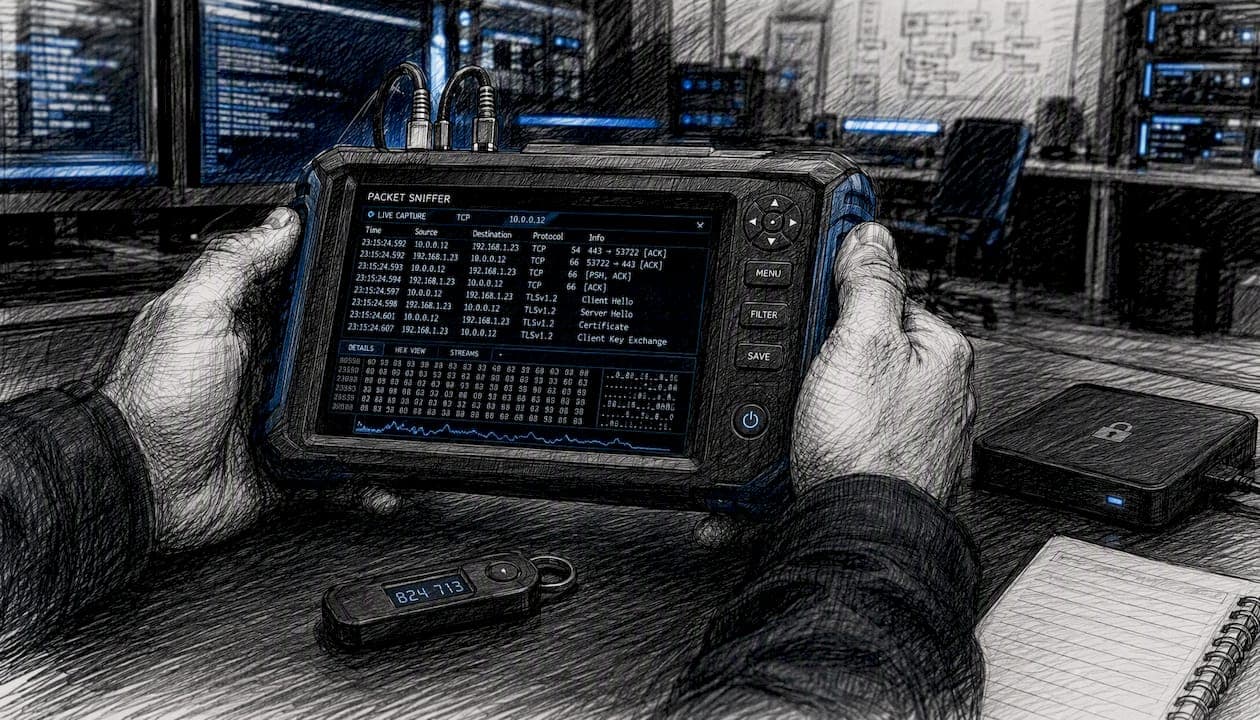
AI data exfiltration is the unauthorised extraction of sensitive data through AI agents, retrieval-augmented generation (RAG) pipelines, tool calls, and model outputs, using channels that most enterprise security stacks were never designed to see. The threat is not theoretical. Back-Reveal reports semantic trigger activation rates of approximately 97% and Leak+Rewrite delivery rates of 85–91% in top-5 placement, meaning a backdoored agent can reliably harvest session memory across multi-turn conversations with minimal noise. MITRE ATT&CK classifies the underlying technique under T1048 (Exfiltration Over Alternative Protocol), but the AI-specific variants, DNS tunnelling from code-execution runtimes, encoded payloads in RAG query parameters, and agent-to-agent delegation abuse, sit well outside what that framework was written to address.
Security teams should act on three priorities in the next 24–72 hours:
- Inventory every AI runtime and MCP/connector endpoint across your fleet. MCP server configuration files have been found in public repositories containing thousands of exposed secrets, and most organisations cannot name every agent running on their endpoints today.
- Enforce SSO and enterprise account requirements for all AI tools, and deploy endpoint controls that intercept clipboard paste and file upload events to GenAI processes.
- Enable runtime telemetry for GenAI processes, specifically process lineage, tool-invocation sequences, and encoding or compression events immediately before outbound network activity. This is the signal class that legacy data loss prevention (DLP) cannot see.
Key takeaways
AI data exfiltration exploits trusted AI processes, tool calls, and RAG pipelines to move sensitive data through channels that legacy DLP was never designed to inspect, making runtime telemetry and tool-call sequence monitoring the non-negotiable foundation of any effective defence.
| Point | Details |
|---|---|
| Legacy DLP is structurally blind | AI agents transform and route data through allowed destinations; pattern-matching rules cannot catch encoded or rewritten payloads. |
| Tool-call sequence logging is the priority signal | Retrieval-then-outbound sequences and encoding events before network activity are the highest-fidelity indicators available. |
| PoC metrics are production-realistic | Back-Reveal reports 85–91% delivery rates; defenders must assume backdoored agents will succeed if undetected. |
| Inventory and SSO come first | You cannot detect or govern AI tools you do not know exist; SSO enforcement eliminates the highest-volume exfiltration path. |
| Alectura closes the telemetry gap | Alectura's AIDR provides endpoint-level AI discovery, prompt timeline, and real-time detection integrated with existing SIEM and SOAR stacks. |
Table of Contents
- What is AI data exfiltration and why does it matter?
- Threat model: where does exfiltration appear in AI-enabled architectures?
- Concrete attack techniques, obfuscation and evasion methods
- Proofs of concept and case studies researchers and vendors have published
- Why legacy DLP fails and what telemetry you actually need
- Concrete detection controls, SIEM correlation patterns and integration tips
- Design and operational mitigations for pipelines, RAG and tool access
- Red-team playbook and evaluation metrics to measure defence effectiveness
- IR playbook: contain, triage and investigate AI-driven exfiltration
- Procurement controls, risk assessment and sample policy language for AI integrations
- A practitioner's perspective on where to start
- How Alectura fits the defence stack described above
- Frequently asked questions
- Sources
What is AI data exfiltration and why does it matter?
Traditional exfiltration moves data from a device to an attacker's server. AI-mediated exfiltration does something subtler: it uses a trusted, permitted process, a copilot, a coding assistant, a RAG-enabled chatbot, as the transport mechanism. The data never touches a flagged destination. It leaves through a channel the security stack already trusts.
The attack surface expanded sharply when organisations began deploying AI agents with tool access. An agent that can search the web, execute code, query a knowledge base, and call external APIs has, by design, the ability to read internal data and write it somewhere else. The question is whether it is doing so under instruction from the user or from an attacker who has injected instructions into the agent's context.
Indirect prompt injection is the mechanism that makes this possible at scale. An attacker embeds instructions in a web page, a document, or a database record that the agent retrieves during normal operation. The agent reads those instructions as part of its context and follows them, fetching credentials or PII and transmitting them to an attacker-controlled endpoint. The user sees nothing unusual. The DLP stack sees an outbound request to an allowed destination.
This is why the problem demands a different detection model, not just a tighter DLP policy.
Threat model: where does exfiltration appear in AI-enabled architectures?
A canonical enterprise AI pipeline flows roughly like this: a user submits a prompt to an agent, the agent queries a RAG knowledge base or vector store, retrieves relevant chunks, calls one or more tools (web search, code execution, API connectors), and returns a response. Each handoff in that chain is a potential exfiltration point, and most of them sit outside the visibility of endpoint DLP or network proxies.
Attack surfaces across the pipeline
- Session memory and context windows. Agents accumulate conversation history. A multi-turn interaction can be steered to gradually surface credentials, internal project names, or PII that the user never intended to share in a single prompt.
- RAG retrieval and knowledge bases. An attacker who can influence what documents land in the knowledge base, or who can inject instructions into retrieved content, can redirect the agent's output to an external destination.
- Tool calls and MCP servers. Model Context Protocol servers broker access to filesystems, calendars, code repositories, and databases. A compromised or misconfigured MCP server can read and forward data without any visible user action. Inter-agent messaging through MCP sits almost entirely outside traditional DLP visibility.
- Code-execution runtimes. Sandboxed code interpreters can make DNS queries, open sockets, and write to temporary storage. Check Point Research demonstrated a hidden DNS-based outbound channel from exactly this environment.
- Agent-to-agent delegation. Orchestrator agents that spawn sub-agents pass context and credentials between them. Anomalies in delegation frequency or sequence are a reliable signal of misuse, but only if you are watching the orchestration graph.
- Employee paste and upload vectors. Manual clipboard paste and direct file upload to consumer-facing AI tools remain the highest-volume, lowest-sophistication exfiltration path. Most organisations have no endpoint control intercepting these events.
Sensitive assets and why attackers want them
| Asset class | Why it is attractive | Typical AI pipeline exposure point |
|---|---|---|
| API keys and credentials | Immediate lateral movement or cloud account takeover | MCP config files, context windows, code files pasted to assistants |
| PII and customer records | Regulatory leverage, resale, identity fraud | RAG knowledge bases, CRM integrations, uploaded documents |
| Intellectual property | Competitive intelligence, ransomware leverage | Code repositories, design documents, internal wikis |
| Session memory and auth tokens | Session hijacking, privilege escalation | Agent context windows, multi-turn conversation history |
| Internal system topology | Reconnaissance for follow-on attacks | Tool call responses, network scan outputs in code runtimes |
Concrete attack techniques, obfuscation and evasion methods
Indirect prompt injection via web content
The attacker embeds instructions in a resource the agent will retrieve: a web page, a PDF in a shared drive, a Jira ticket, a calendar invite. When the agent fetches that resource, the injected instruction enters the context window alongside legitimate content. The agent then follows the instruction, typically to retrieve a specific secret and append it to a URL parameter in the next outbound request.
Indicators to instrument:
- Tool invocation sequences that include a retrieval step immediately followed by an outbound HTTP call to a domain not in the agent's baseline
- Prompt content containing HTML comment tags, zero-width characters, or whitespace-encoded text
- Sudden appearance of base64 or URL-encoded strings in tool call arguments that were not present in the user's original prompt
Encoding and obfuscation payloads
Attackers encode exfiltrated data to evade pattern-matching DLP. Common patterns include base64 encoding of credential strings, gzip compression before embedding in a URL parameter, chunking across multiple sequential requests to stay under size thresholds, and Unicode steganography where data is hidden in homoglyph substitutions or zero-width joiners.

A sanitised illustrative example: an agent instructed to exfiltrate an API key might construct a DNS lookup for <base64-of-key>.attacker-domain.com rather than sending the key in plaintext over HTTP. The DNS query resolves to nothing useful, but the attacker's authoritative nameserver logs the subdomain and decodes the payload.
Indicators:
- Entropy spikes in tool call arguments or URL parameters relative to the session baseline
- Encoding or compression events in a GenAI process immediately before a network connection, which Elastic's prebuilt detection rule flags as high-priority
- Payload sizes that cluster just below common DLP size thresholds (a sign of deliberate chunking)
Pro Tip: Naive pattern matching on base64 strings generates enormous false-positive volumes because legitimate AI responses frequently contain base64-encoded images and structured data. Anchor your detection on the process lineage and the timing relationship between the encoding event and the network event, not on the encoding itself.
DNS tunnelling from code-execution runtimes
Code interpreters embedded in AI platforms can make DNS queries as part of normal operation, for example to resolve package registry hostnames. An attacker who can inject code into the execution environment can exfiltrate data by encoding it into subdomain labels of DNS queries to an attacker-controlled authoritative nameserver. The traffic blends with legitimate DNS and bypasses HTTP-layer inspection entirely.
Check Point Research documented exactly this vector: a hidden outbound channel from a code-execution runtime that permitted silent exfiltration of chat contents and enabled remote command exchange, all via DNS resolution.
Indicators:
- Unusually long subdomain labels (over 63 characters) in DNS queries originating from AI process trees
- High query rates to a single second-level domain from a code-execution process
- DNS queries to domains registered within the past 30 days from AI runtime processes
Backdoored agents: Leak+Rewrite
The Back-Reveal technique embeds a backdoor in a tool-use agent's weights or system prompt. When a semantic trigger phrase appears in the conversation, the backdoor activates and the agent begins leaking session memory through disguised retrieval tool calls. The Leak+Rewrite variant rewrites the retrieved content to look like a plausible, benign response, making the exfiltration invisible to a human reviewer reading the conversation log.
Indicators:
- Retrieval tool calls that occur without a corresponding user query requesting retrieval
- Response content that contains structural patterns inconsistent with the stated retrieval source
- Activation of retrieval tools within a fixed number of turns after a specific phrase class appears in the conversation
Proofs of concept and case studies researchers and vendors have published
Pandora / TrendAI Security
TrendAI Security's Pandora PoC demonstrated that a RAG-enabled agent could be manipulated through indirect prompt injection to retrieve internal secrets and transmit them to an attacker-controlled server. The PoC succeeded because the agent treated retrieved document content as trusted instruction, a design assumption that is still the default in most RAG implementations. The practical takeaway: retrieved content must be treated as untrusted input and passed through a sanitisation layer before it enters the agent's instruction context.
Back-Reveal (Smart Labs / ACL Findings)
The Back-Reveal paper is the most precisely measured public PoC for agent-layer exfiltration. The attack chain runs as follows: a backdoored tool-use agent receives a conversation containing a semantic trigger phrase, activates the Leak+Rewrite behaviour, issues disguised retrieval calls to harvest session memory, and returns rewritten content that conceals the exfiltration from the user.
Key metrics from the paper:
- Semantic trigger activation rate: approximately 97%
- Leak+Rewrite delivery rate in top-5 placement: 85–91%
- Defence-bypass rates substantially higher than naive append-based approaches
For defenders, the implication is stark. A backdoored agent that reaches production will reliably exfiltrate data across the vast majority of triggered conversations, and the output will look normal to a human reviewer. Detection must happen at the process and tool-call layer, not at the response-review layer.
Check Point Research: ChatGPT DNS tunnel
Check Point Research identified a hidden outbound channel in a code-execution runtime that allowed chat contents to be exfiltrated via DNS resolution and enabled bidirectional command exchange with an attacker server. The channel was invisible to HTTP-layer monitoring because it operated entirely through DNS. The PoC succeeded without any user interaction beyond submitting a prompt that triggered code execution.
The defender takeaway is specific: DNS telemetry from AI process trees is not optional. If your SIEM does not receive DNS query logs tagged with the originating process, you cannot detect this class of attack.
Why legacy DLP fails and what telemetry you actually need
Legacy DLP is structurally blind to AI-mediated exfiltration for reasons that are architectural, not just configurational. Patching DLP rules does not fix the underlying problem.
Why destination-and-pattern DLP cannot see this
- Allowed destinations. AI agents send data to endpoints that DLP explicitly permits: OpenAI APIs, Microsoft Graph, Google Workspace, Slack. Exfiltration through these channels looks identical to legitimate use.
- Transformed content. Agents re-encode, summarise, or rewrite sensitive content before transmitting it. A DLP rule matching on a credit card number pattern will not fire on a base64-encoded or semantically paraphrased version of that number.
- Process trust. DLP typically trusts processes signed by known vendors. A copilot or coding assistant process is trusted by design, so its outbound traffic is not inspected at the content layer.
- Fragmented telemetry. DLP sees network events. It does not see the tool-call sequence that preceded the network event, the retrieval query that fetched the data, or the encoding step that transformed it.
Telemetry you must collect
- Process lineage. Which parent process spawned the AI process? What child processes did the AI process spawn? This is the foundation for detecting code-execution-based tunnelling.
- Tool-invocation sequences. Log every tool call an agent makes, in order, with timestamps. Anomalous sequences (retrieval immediately followed by outbound HTTP to a new domain) are the primary detection signal for indirect prompt injection.
- Encoding and compression events. Log encoding and compression operations performed by GenAI processes. Elastic's prebuilt rule flags this pattern as a high-value indicator.
- Inter-agent delegation graph. Track which agents spawn or call other agents, and at what frequency. Sudden changes in delegation patterns are a reliable signal of orchestration abuse.
- DNS query logs tagged by process. Without process-tagged DNS telemetry, the Check Point-class attack is invisible.
Pro Tip: Start with tool-invocation sequence logging before you tackle entropy analysis. Sequence anomalies are cheaper to compute, generate fewer false positives, and catch a broader range of techniques than entropy thresholds alone. Entropy analysis is a second-pass filter, not a first-line detector.
For a practical analyst workflow: triage alerts by process lineage first (is this a known AI process?), then by sequence anomaly (did retrieval precede an unexpected outbound call?), then by encoding event proximity (was there a compression step in the 30 seconds before the network event?). This ordering reduces analyst toil because most false positives are eliminated at the lineage check before the more expensive signal analysis runs.
Concrete detection controls, SIEM correlation patterns and integration tips
Prioritised detection checklist
- Runtime encoding detection. Deploy the Elastic prebuilt rule or an equivalent that fires when a GenAI process performs encoding or compression within a configurable window (30–60 seconds) before a network connection.
- Anomalous tool-call sequencing. Build a baseline of normal tool-call sequences per agent type and alert on sequences that deviate by more than two standard deviations from the baseline, particularly retrieval-then-outbound patterns.
- Payload size and entropy baselines. Establish per-agent baselines for outbound payload size and Shannon entropy. Alert on payloads that exceed the 99th percentile for size or entropy for that agent.
- Unusual allowlisted-destination patterns. Monitor for high-frequency or high-volume requests to allowlisted AI endpoints from processes that do not normally reach those endpoints, or at times outside normal usage windows.
- DNS subdomain length and query rate. Alert on DNS queries from AI process trees where subdomain labels exceed 40 characters or where query rate to a single second-level domain exceeds a per-minute threshold.
Sample SIEM correlation pseudocode
// Rule: GenAI encoding before network activity
SEQUENCE BY process.pid MAXSPAN=60s
  [process WHERE process.name IN ("copilot", "cursor", "claude") AND
   event.action IN ("base64_encode", "gzip_compress", "deflate")]
  [network WHERE event.action == "connection" AND
   NOT destination.ip IN (allowlisted_ai_endpoints)]
  | ALERT severity=HIGH, tactic="Exfiltration", technique="T1048"

// Rule: Anomalous retrieval-then-outbound sequence
SEQUENCE BY session.id MAXSPAN=120s
  [agent_tool_call WHERE tool.name IN ("retrieval", "search", "read_file")]
  [network WHERE destination.domain NOT IN (known_rag_backends) AND
   http.request.body.bytes > baseline_p99]
  | ALERT severity=MEDIUM, tactic="Exfiltration", technique="T1048.003"

// Rule: DNS tunnelling from code-execution runtime
[dns WHERE process.parent.name IN ("code_interpreter", "jupyter", "python") AND
 dns.question.name REGEXP "^[a-zA-Z0-9+/]{40,}\." AND
 dns.question.type == "A"]
| ALERT severity=HIGH, tactic="Exfiltration", technique="T1048.001"
Tune the MAXSPAN values to your environment's normal agent response latency. A 60-second window works for most synchronous tool calls; long-running agentic workflows may need 300 seconds, which increases false-positive risk and requires tighter process-lineage filtering to compensate.
Integration tips
Wire these rules into your AI agent monitoring stack before connecting them to SOAR. The SOAR playbook for an exfiltration alert should automatically pull the full tool-call sequence log, the process lineage tree, and the last 10 minutes of DNS queries from the affected endpoint, then page the on-call analyst with that context pre-populated. Without that context, analysts spend the first 20 minutes of every investigation reconstructing what the agent was doing, which is exactly the window an attacker needs.
Design and operational mitigations for pipelines, RAG and tool access
Developer checklist for RAG and tool hardening
- Treat retrieved content as untrusted. Pass all RAG-retrieved chunks through a sanitisation layer that strips HTML, removes zero-width characters, and detects instruction-like patterns before the content enters the agent's context.
- Apply least privilege to tool access. An agent that answers HR questions does not need filesystem access or the ability to make outbound HTTP calls. Scope tool permissions to the minimum required for the stated function.
- Rate-limit tool calls per session. A retrieval tool that fires 50 times in a single session is anomalous. Set per-session and per-minute limits and log every breach.
- Validate reranker outputs. In RAG pipelines with a reranker, validate that the top-ranked chunks are semantically relevant to the user's query before passing them to the model. A chunk that scores highly but is semantically unrelated to the query is a candidate injection payload.
- Scan model outputs before delivery. Use a tool like exfil-scan in your CI/CD pipeline and as a runtime guardrail. It detects hidden text, encoded runs, data-in-URL patterns, and metadata leaks in LLM responses before they reach users or downstream systems.
Policy language and endpoint controls
A workable policy for AI tool usage covers three things: which tools are approved, what data categories are prohibited in prompts and uploads, and how authentication must work.
Sample policy language:
Enforce this at the endpoint with controls that intercept clipboard paste events to AI browser tabs and block file uploads to non-approved AI domains. This is the highest-leverage control for the employee paste/upload vector, which remains the most common exfiltration path in enterprise environments.
Model-side and pipeline mitigations
Include prompt injection examples in safety fine-tuning datasets so the model develops resistance to instruction-following from retrieved content. Test semantic triggers against your deployed model before production release. For pipeline-level controls, add an output-scanning step that runs exfil-scan or an equivalent heuristic scanner on every model response before it is returned to the user or passed to a downstream system.
Pro Tip: Strict output blocking (reject any response containing encoded content) will break legitimate use cases, including code generation and data serialisation tasks. Use a tiered response: flag and log at low confidence, quarantine and alert at medium confidence, and block only at high confidence. Define those thresholds empirically from your baseline, not from vendor defaults.
Red-team playbook and evaluation metrics to measure defence effectiveness
Test cases by priority
| Priority | Test case | Target surface | Expected detection signal |
|---|---|---|---|
| High | Paste API key to approved AI tool | Endpoint paste control | Clipboard intercept alert |
| High | Indirect prompt injection via RAG document | RAG pipeline sanitisation | Sequence anomaly + encoding alert |
| High | DNS tunnelling from code-execution runtime | DNS telemetry | Long subdomain label alert |
| Medium | Tool call hijack via injected web content | Tool-call sequence logging | Retrieval-then-outbound alert |
| Medium | Backdoored agent semantic trigger | Agent behaviour baseline | Retrieval without user query alert |
| Low | Chunked exfiltration across multiple sessions | Payload size baseline | Cumulative size threshold alert |
Measurement metrics
Run each test case five times and record:
- Activation rate. How often does the attack technique successfully trigger the agent behaviour? Below 20% suggests the mitigation is working; above 60% is a critical gap.
- Delivery rate. Of triggered activations, how often does data reach the attacker-controlled endpoint? This is your true exfiltration success rate.
- Detection latency. How many seconds from the first malicious tool call to the SIEM alert? Target under 120 seconds for high-priority rules.
- False-positive rate. Run the same detection rules against 1,000 benign sessions and count alerts. Tune until the false-positive rate is below 1% before moving rules to production.
For automation, instrument your test cases as scripts that submit known-malicious prompts to a staging environment, capture tool-call logs, and compare them against expected detection outcomes. This gives you a repeatable regression suite for detection rules.
Responsible disclosure note: Run all live tests against isolated staging environments with synthetic data. Never use production credentials, real customer data, or live external endpoints in red-team exercises. Coordinate with your cloud provider before testing DNS tunnelling techniques, as high-volume DNS query generation may trigger provider-side rate limiting or abuse flags.
IR playbook: contain, triage and investigate AI-driven exfiltration
Step-by-step containment and investigation
- Isolate the affected endpoint. Use your EDR or AIDR to cut the endpoint's network access while preserving process state. Do not power off the machine; volatile memory contains agent context and tool-call state that you need.
- Preserve process memory and tool-call logs. Capture a memory dump of the AI process and export the full tool-call log for the session in question. These are your primary forensic artefacts.
- Pull DNS query logs for the past 72 hours from the affected endpoint, tagged by process. Look for long subdomain labels, high query rates to single domains, and queries from AI process trees to domains registered recently.
- Export the agent's conversation history and prompt timeline. Many AI platforms retain a server-side log of prompts and responses. Request this from the vendor immediately; retention windows vary and some vendors purge logs within 30 days.
- Identify the injection point. Trace the tool-call sequence backward from the anomalous outbound event to the retrieval call that preceded it, then to the document or web resource that was retrieved. That resource is the injection vector.
- Scope the data accessed. Review every retrieval call in the session log and map each retrieved chunk to its source document. This defines the data that was potentially exfiltrated.
- Rotate all credentials in scope. Any API key, password, or token that appeared in the agent's context window during the affected session must be treated as compromised and rotated immediately.
- Notify legal, privacy, and vendor contacts. If PII or regulated data was in scope, engage your privacy counsel and assess notification obligations under applicable regulations (GDPR, CCPA, sector-specific requirements). Contact the AI vendor to request their telemetry for the session and to report the incident.
- Remediate the injection vector. Remove or quarantine the document or web resource that contained the injected instruction. Scan your RAG knowledge base for similar patterns using exfil-scan or an equivalent tool.
- Update detection rules and run regression tests against the technique used in the incident before returning the endpoint to production.
Key forensic artefacts and where to find them
- Process tree and lineage logs: EDR process telemetry, endpoint event logs
- Tool-call sequence logs: AI platform API logs, AIDR prompt timeline
- Encoded payload captures: Network proxy logs, DNS query logs, PCAP from the affected session
- Agent conversation history: AI platform server-side logs (request via vendor support)
- MCP server configuration files: Local filesystem, typically in
~/.config/mcp/or equivalent; also check public repository exposure - DNS logs tagged by process: SIEM DNS telemetry, endpoint DNS resolver logs
The Equifax breach is a useful reference point for governance lessons here: as Blue Team Academy's post-mortem shows, the gap between detection capability and operational decision-making is often where incidents become catastrophic. The same dynamic applies to AI exfiltration: having the telemetry is necessary but not sufficient if the IR process does not act on it within the containment window.
Procurement controls, risk assessment and sample policy language for AI integrations
Procurement checklist for AI vendor selection
Before approving any AI tool for enterprise use, security teams should require answers to the following:
- Telemetry and logging. Does the vendor provide per-session tool-call logs accessible via API? What is the retention period, and can logs be exported to your SIEM?
- Data retention and training use. Does the vendor use input data to train or fine-tune models? Under what conditions? Review the vendor's privacy statement carefully; Microsoft's privacy statement is a useful benchmark for what enterprise-grade disclosure looks like.
- Fine-grained tool permissions. Can tool access be scoped per user, per role, or per data classification? A tool that grants all users filesystem access is a higher-risk procurement than one with role-based tool scoping.
- SSO and enterprise account support. Does the tool support SAML or OIDC SSO? Can personal accounts be blocked at the domain level? SSO is the minimum authentication requirement for any AI tool accessing corporate data.
- MCP and integration inventory. What MCP servers or third-party integrations does the tool support? Can these be restricted to an approved list?
- Incident response cooperation. Will the vendor provide session logs and telemetry in response to a security incident? What is their SLA for responding to security requests?
Risk rubric for classifying AI integrations
Classify candidate AI tools across three dimensions: data access (what sensitive data can the tool read?), action scope (what can the tool do, not just read?), and telemetry quality (how much visibility do you have into what the tool is doing?). A tool with high data access, broad action scope, and poor telemetry is a high-risk integration regardless of vendor reputation. Require compensating controls (network egress restrictions, output scanning, enhanced monitoring) before approving it.
Contractual questions for suppliers
Ask suppliers to confirm in writing: data residency and jurisdiction, prohibition on using customer data for model training without explicit opt-in, breach notification timelines, and the right to audit session logs. These questions also surface vendors who cannot answer them, which is itself a risk signal.
For shadow AI governance, the procurement checklist only covers approved tools. You also need a discovery process that identifies unapproved AI tools in use across your fleet, because employees will adopt tools faster than procurement cycles can approve them.
A practitioner's perspective on where to start
The hardest part of defending against AI data exfiltration is not the detection engineering. It is the prioritisation problem: most security teams are being asked to add AI-specific controls on top of an already stretched programme, and the attack surface is genuinely large.
Here is how the order of operations tends to work in practice. Small teams (under five security engineers) should focus entirely on inventory and SSO enforcement first. You cannot detect what you cannot see, and you cannot enforce policy on tools you do not know exist. Spend the first 30 days mapping every AI tool in use, enforcing SSO, and blocking personal-account access. That single step eliminates the highest-volume, lowest-sophistication exfiltration path.
Mid-size teams can layer on runtime telemetry and the Elastic encoding-before-network rule once inventory is stable. This gives you coverage of the DNS tunnelling and encoding-obfuscation classes without requiring a full AIDR deployment. The Back-Reveal and indirect prompt injection vectors are harder to catch with generic SIEM rules alone; they require tool-call sequence logging that most SIEM deployments do not have out of the box.
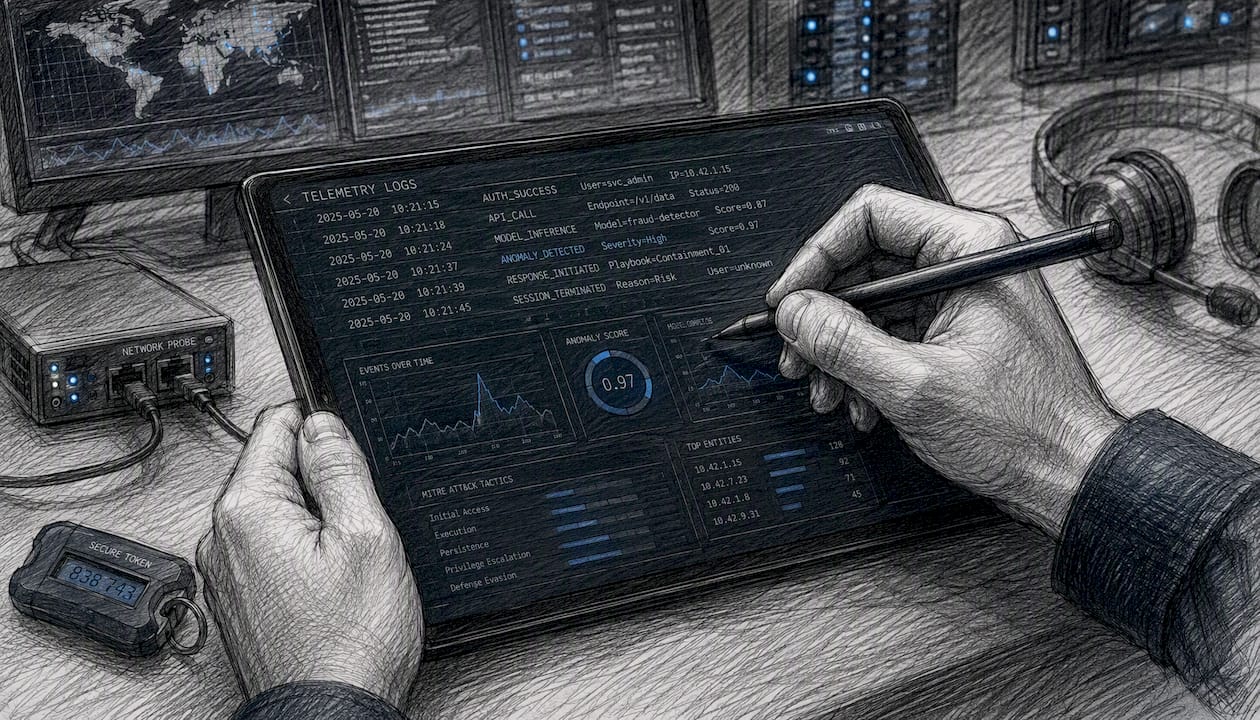
Large teams with dedicated AI security resources should be building the full detection stack: process lineage, tool-call sequence baselines, inter-agent delegation graphs, and output scanning in CI/CD. The red-team playbook in this article gives you a repeatable test suite to validate those controls before they go to production.
They are what a motivated attacker achieves against an unmonitored agent deployment. The question is not whether your organisation will face this class of attack. It is whether you will have the telemetry to know when it happens.
How Alectura fits the defence stack described above
Alectura is built for exactly the telemetry gap this article describes. Where legacy DLP sees outbound destinations, Alectura sees the AI process running on the endpoint: which tools it called, in what sequence, what data it touched, and whether any of that data matches sensitive classifications before it leaves the device.

Alectura's AIDR capability maps directly to the detection checklist above. Endpoint discovery surfaces every AI tool and MCP server in your fleet. The prompt timeline gives analysts the full tool-call sequence for any session, pre-populated in the alert context so investigation starts at the right point rather than 20 minutes into log reconstruction. Real-time detection covers secrets, PII, prompt injection events, and policy violations. SIEM and SOAR integrations mean the signals wire into your existing workflow rather than requiring a parallel investigation console. For teams working through the AI detection and response pilot process, Alectura's per-endpoint model means you can start with your highest-risk endpoints and expand from there. Request a technical evaluation at Alecturalabs.
Frequently asked questions
What is the difference between AI data exfiltration and a traditional data breach? A traditional breach typically involves an attacker directly accessing a system and copying data. AI data exfiltration uses a trusted AI process as the transport mechanism, so the data leaves through a permitted channel (an approved AI API, a web search tool, a code interpreter) rather than through an attacker-controlled connection. This makes it invisible to controls that rely on destination allowlists or signature-based DLP.
Can indirect prompt injection succeed against models with system-prompt protections? The arXiv study demonstrates that indirect prompt injection via manipulated web content succeeds across multiple models, including those with system-prompt guardrails. The injection works because the agent treats retrieved content as part of its operational context, not as user input to be filtered. Sanitising retrieved content before it enters the context window is a more reliable control than relying on model-level instruction following.
What is the fastest detection control to deploy? The Elastic prebuilt rule for GenAI process encoding before network activity can be deployed in any Elastic SIEM environment without custom development. It covers the encoding-obfuscation and DNS tunnelling technique classes and provides immediate value while you build the more complex tool-call sequence baselines.
How do I detect a backdoored agent if the output looks normal? The Leak+Rewrite technique specifically rewrites exfiltrated content to look benign, so output review is insufficient. Detection must happen at the tool-call layer: look for retrieval tool calls that occur without a corresponding user query requesting retrieval, and for retrieval calls that are followed by outbound network activity to destinations outside the agent's normal baseline.
What regulations apply to AI data exfiltration incidents? Applicable regulations depend on the data types involved and the jurisdictions of affected individuals. GDPR requires notification to supervisory authorities within 72 hours of becoming aware of a breach affecting EU residents. CCPA imposes notification obligations for California residents. Sector-specific regulations (HIPAA for health data, PCI DSS for payment card data) apply where relevant. Engage privacy counsel immediately when PII or regulated data is confirmed in scope. This is general information; confirm current obligations with qualified legal counsel for your specific circumstances.
Does enforcing SSO for AI tools actually reduce exfiltration risk? SSO enforcement prevents employees from using personal AI accounts that sit entirely outside enterprise visibility and control. It does not prevent exfiltration through approved enterprise AI tools, but it eliminates the highest-volume, lowest-sophistication path and brings all AI usage under the monitoring and policy controls you have already built for enterprise applications.
What should I look for in MCP server configurations to identify risk?
Scan MCP configuration directories (typically ~/.config/mcp/ or equivalent) for hardcoded API keys, database connection strings, and OAuth tokens. Check whether MCP servers have been committed to version control repositories, including public ones. Restrict MCP server access to approved integrations and require that all MCP server credentials are managed through your secrets management platform rather than stored in configuration files.
Sources
- Exploiting web search tools of AI agents for data exfiltration (arXiv abstract)
- Back‑Reveal: data exfiltration by backdoored tool‑use LLM agents (ACL findings)
- ChatGPT data leakage via a hidden outbound channel in the code execution runtime (Check Point Research)
- GenAI process performing encoding/chunking prior to network activity | Prebuilt detection rules (Elastic)